The investigation
A living ocean.
An industrial frontier.
From the seabed to Pacific communities, Blue Peril examines a footprint that could extend beyond the mine.
01 / The seafloor
More than
mineral deposits.
Polymetallic nodules are part of the environment in which deep-sea organisms live.
The campaign highlights the physical destruction of habitat as nodules are collected. Removing the nodules also removes hard surfaces used by seabed life.
Blue Peril builds on a 2020 review of scientific literature on Pacific nodule mining. That review considers ecological risks alongside major gaps in what is known.
Read the 2020 literature review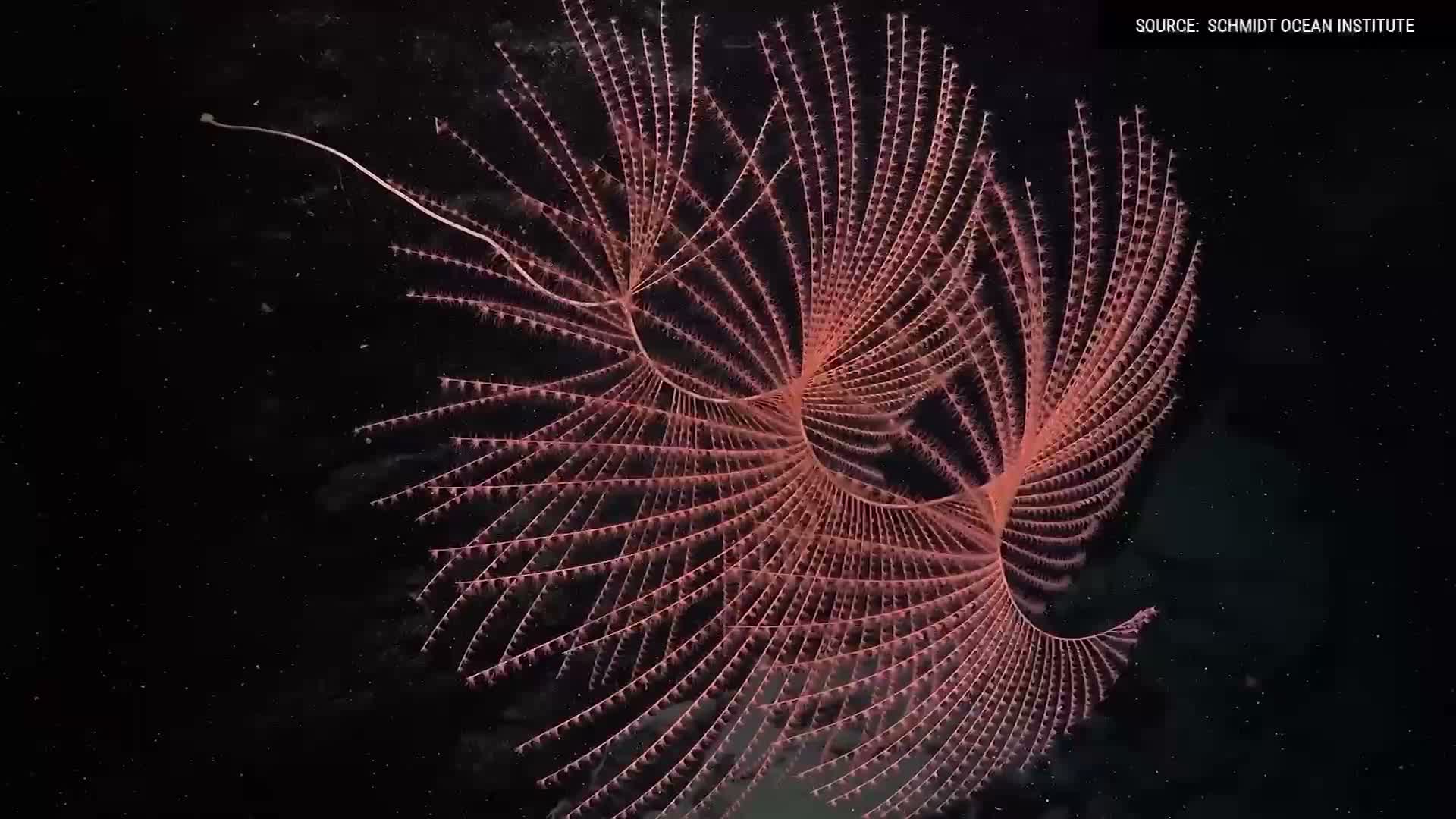
02 / The water column
Disturbance
does not stay still.
Mining can create more than one sediment plume.
Seabed collection disturbs sediment close to the bottom. Processing nodules on a support vessel can produce another source: a discharge of water and fine material back into the ocean.
Blue Peril models these pathways separately. The scenarios explore where particles might travel under specified current and settling assumptions.
Compare the two scenarios ↗03 / Pacific peoples
The ocean is
part of home.
For Pacific communities, the ocean connects food, livelihoods, identity and responsibility.
The Pacific Blue Line statement centers these relationships and calls for a global ban on deep-sea mining. It also welcomes moratoria adopted by some Pacific governments while asking for broader protection.
The Blue Peril toolkit links to this Pacific-led movement. Read its statement in the voices of the organizations and people who issued it.
Read the Pacific Blue Line statement